


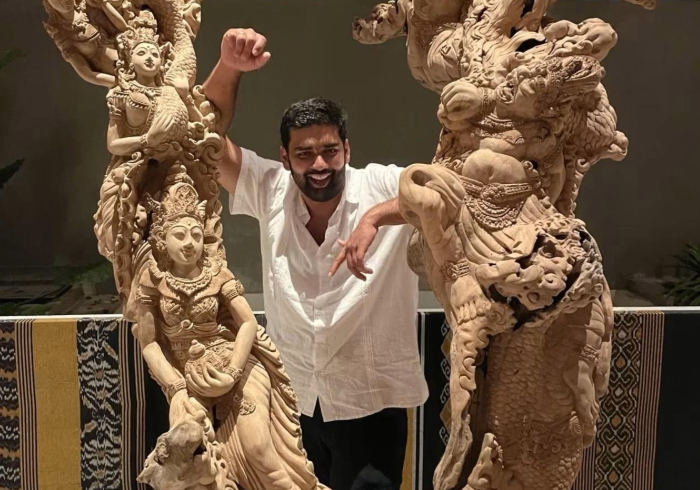
A man accused by energy trader Niels Troost of masquerading as a CIA spy to defraud tens of millions from his Swiss trading company was a secret counter-terrorism informant for the FBI, the US government has admitted.
In a high-profile spat, Gaurav Srivastava has been accused by Troost of being a “brazen con man” who helped get the Dutchman and his Paramount Energy & Commodities firm sanctioned across the EU, UK and Switzerland in 2023 and 2024. Some of those measures have since been lifted.
Srivastava has also been labelled in media reports as a “fake spy” who attempted to parlay his purported CIA work into high-level political connections and lucrative business opportunities in countries such as Libya, Sudan and Indonesia.
He has repeatedly denied holding himself out to be a CIA operative and argues the claims against him stem from a “vast and well-orchestrated” campaign by Troost to remove the sanctions, which were applied over the company’s alleged trading of Russian oil.
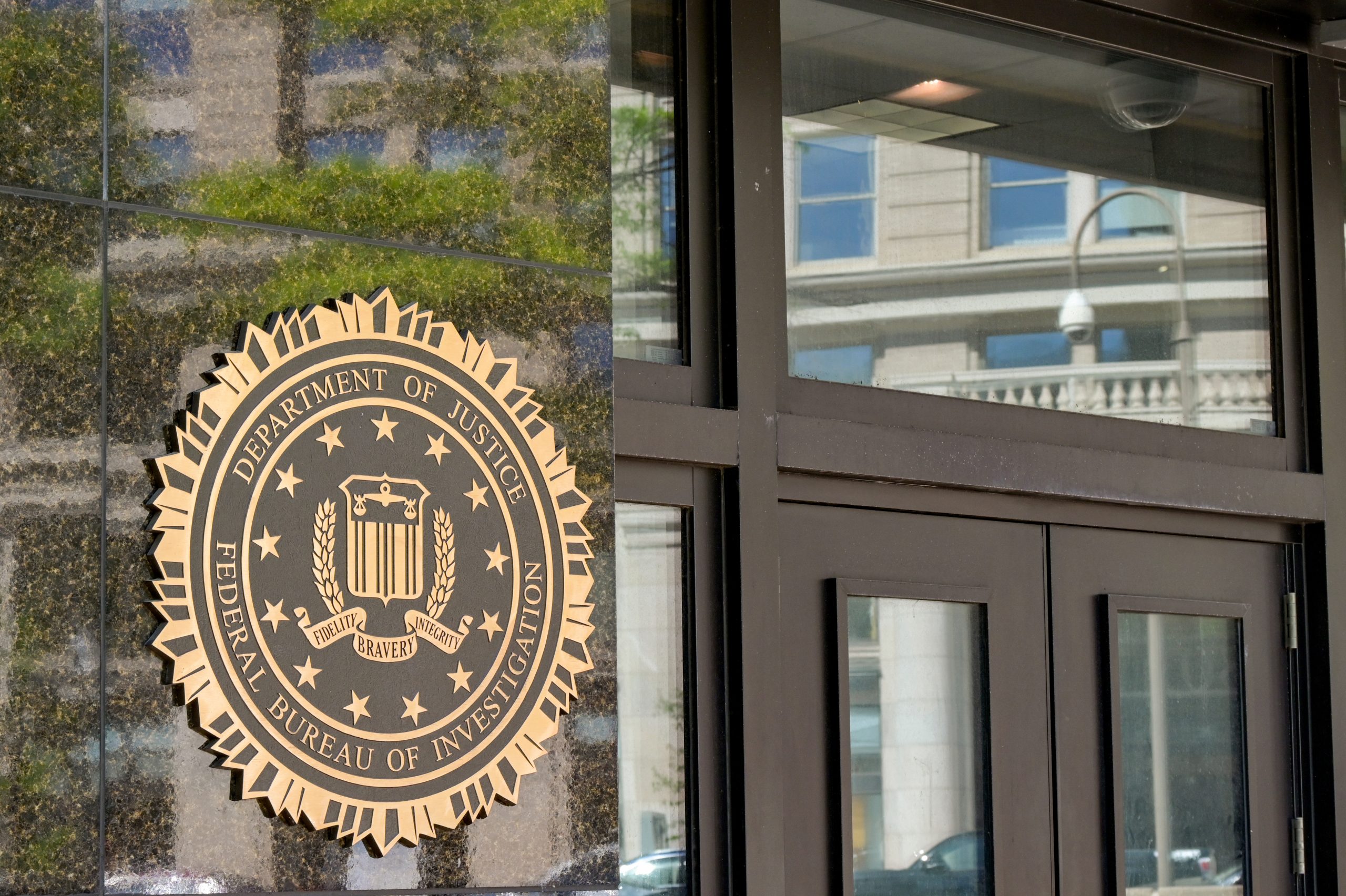
But in the latest twist to the outlandish story surrounding Srivastava, US court filings in an unrelated case have revealed he was a covert informant for the FBI on undisclosed, “sensitive” counter-terrorism and national security matters between September 2019 and June 2024.
Srivastava’s work for the FBI has not been previously reported. He did not respond to a request for comment from GTR.
The revelations emerged as part of a case in which three US citizens – Jerrid Douglas, Roy Gillar and Harold Mignott – received jail terms of between six years to 45 months for their roles in a scheme to fleece victims out of hundreds of thousands of dollars by promising access to a €1bn standby letter of credit from HSBC which the government said never existed.
In June this year the convictions were been vacated due to Srivastava’s role in the case.
Srivastava, an Indian national resident in the US, gave evidence at the 2022 trial. Though not identified as one of the alleged scheme’s victims, he told the court he had also been induced by Douglas to pay US$250,000.
A judge agreed to keep Srivastava’s status as an FBI informant secret from the defence and jury during the proceedings, after prosecutors provided a letter saying there was nothing in Srivastava’s FBI file to suggest he was an unreliable witness.
But in March last year, a US attorney disclosed in court that the letter “contained several serious inaccuracies pertaining to the scope of Srivastava’s work as a CI [covert informant] and derogatory information about his trustworthiness”.
The US government did not disclose what intelligence Srivastava provided to the FBI, but said in return he was paid US$7,244.08, mainly comprising travel expenses.
The documents also show Srivastava was retained as an informant despite concerns about his character. The March 2025 filing revealed that, in late 2021, the FBI identified “issues of control, reliability, and honesty” with Srivastava.
A routine report penned by the FBI at the time said another unidentified government agency told the FBI it had “multiple concerns” about the information from Srivastava, suggesting he “may have given false information to disrupt” both the unnamed agency and the FBI.
Srivastava “ha[d] provided good intelligence in the past but also bad intelligence in several incidences”, the report said.
None of this information had been disclosed to the judge in the standby letter of credit trial when he allowed Srivastava’s role as a covert informant to remain secret.
The defendants seized on the revelations by the government to argue for a retrial and full disclosure of Srivastava’s work as an informant for any government agency, including how much he was paid, any training he received and what assessments were made of his credibility.
The government resisted the motion, but the two sides nevertheless began negotiating. Those talks culminated in June this year, with Douglas, Gillar and Mignott having their convictions vacated as part of a non-prosecution agreement. Under the deal, they are still required to pay restitution payments to certain individuals.
Both the FBI and the New Jersey District Attorney’s office, which prosecuted the case, declined to comment.
Srivastava was terminated as an FBI informant “for cause” in June 2024.
‘Our Srivastava’
The latest revelation about Srivastava’s life was triggered when one of the three defendant’s lawyers, Melissa Geller, happened to pick up a copy of the Wall Street Journal in late August 2024 and started reading a story headlined ‘The Fake Spy Who Dazzled D.C.’
The Journal article was the first of several pieces reporting on Srivastava’s close ties with Washington insiders and powerful politicians in the Middle East and Africa, as well as the beginnings of his bitter feud with Troost.
“I’d read about two paragraphs in, and I was like ‘I think that’s our Srivastava, the Srivastava from our trial’,” Geller said. “It was one of those ‘there’s no way’ moments.”
The lawyer, a partner at Duane Morris LLP representing Mignott, and the other defence counsel promptly asked the state for confirmation it was the same person as the witness in their trial. The government said it was.
In October 2022, as his relationship with Troost was deepening, Srivastava had been called as a witness to the New Jersey trial of Douglas, Gillar and Mignott.
At the time, Srivastava had testified that he had transferred US$250,000 to an escrow agent under threat of legal action by Douglas and another defendant who died before the trial, according to a transcript.
Douglas’s defence team later raised concerns that Srivastava had lied to the government about key details of the case, filings show, but no action was taken after Srivastava addressed those concerns in an interview with district attorneys and an FBI agent.
The government countered that the defendants had exaggerated the relevance of Srivastava’s testimony to the convictions.
After the government revealed that Srivastava was an FBI informant, the defendants accused Srivastava of making his testimony more favourable to the state’s case against the trio.
Nevertheless, in a filing asking a court to vacate the convictions and dismiss the indictments against Douglas, Gillar and Mignott on May 29 this year, the government said it had agreed to a non-prosecution deal in part because “potentially retrying this matter would consume scarce prosecutorial and judicial resources”.
By the time the agreement was inked, all three defendants had already been released from prison. Mignott told GTR that the court’s vacation of the judgment “represents a complete and total vindication”.
“This outcome decisively affirms what my family, my community, and I have known from the outset.”
Douglas said he was “deeply troubled to learn of the government’s disclosures”.
“Information of this significance should have been available to the defence so that it could be properly examined during the judicial process. The consequences of this case have been profound, affecting my family, my professional reputation, and years of my life that I cannot recover,” he said.
The other outcome of the deal: the detailed information about Srivastava’s work for government agencies, sought by the defendants, was not disclosed.
High-level connections
According to newspaper reports published since his relationship with Troost soured, Srivastava has worked closely with ex-special forces members on an international consulting business that included attempts to sign Libyan oil deals in return for military work as well as winning access to Sudan gold supplies in exchange for counter-terrorism training.
He also cultivated a close relationship with retired US general Wesley Clark and become a benefactor of Washington, DC’s prestigious Atlantic Council think-tank.
But it was his relationship with Troost that thrust him into the spotlight. The pair met in early 2022, shortly after Russia’s invasion of Ukraine.
Srivastava says on his personal website that at that time banks were distancing themselves from Troost, a long-time trader of Russian oil, “and Srivastava was able to offer him his long-standing contacts and banking relationships, diversified business opportunities in other commodities, and significant credit facilities”.
Troost claimed in a California lawsuit filed in January that he was won over by Srivastava’s purported ongoing clandestine work for the US government and agreed to transfer 50% of his company to Srivastava as part of a plan to continue marketing Russian-origin oil with discreet US approval.
The suit also alleges Srivastava misappropriated over US$43mn in cash from Troost and his companies.
Srivastava has moved to dismiss the case, arguing it has been brought in the wrong jurisdiction, does not meet a threshold for relief and is outlawed by a Californian law on SLAPP lawsuits [strategic litigation against public participation].
In a court filing, he claimed that “Troost has spent millions of dollars on what has become a relentless, years-long media and lawfare campaign against Srivastava, designed to shift blame away from himself, rehabilitate his tattered reputation, and obtain sanctions relief so he can resume his illicit activities”.
Allegations he pretended to be a spy are “fantastical”, he said.